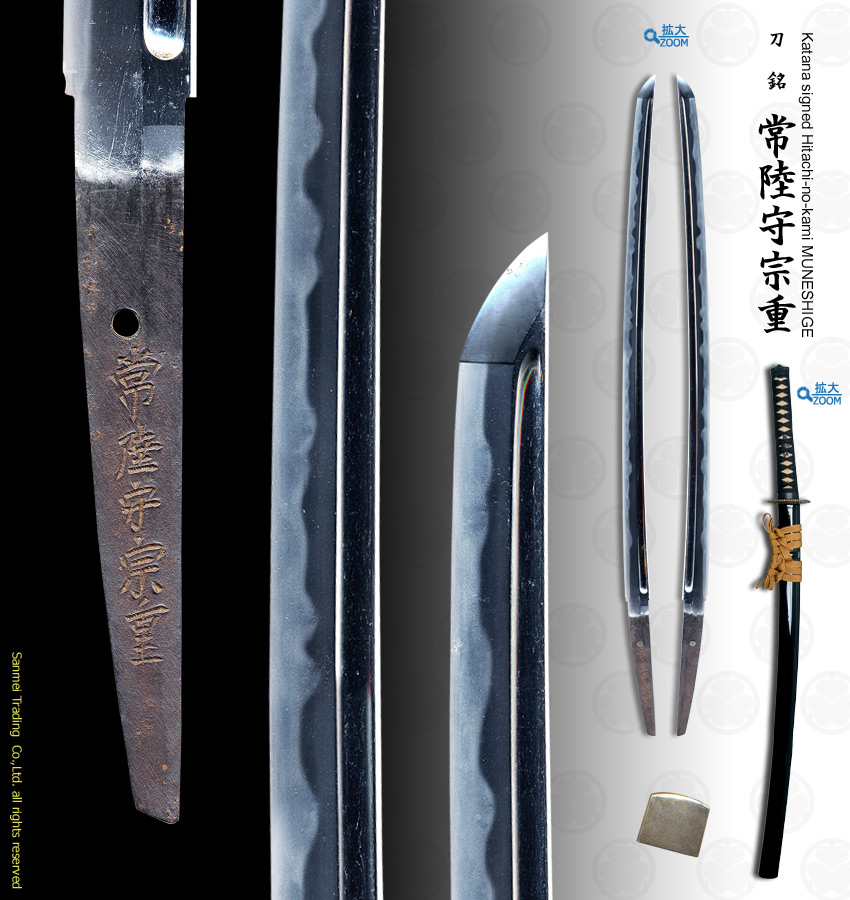
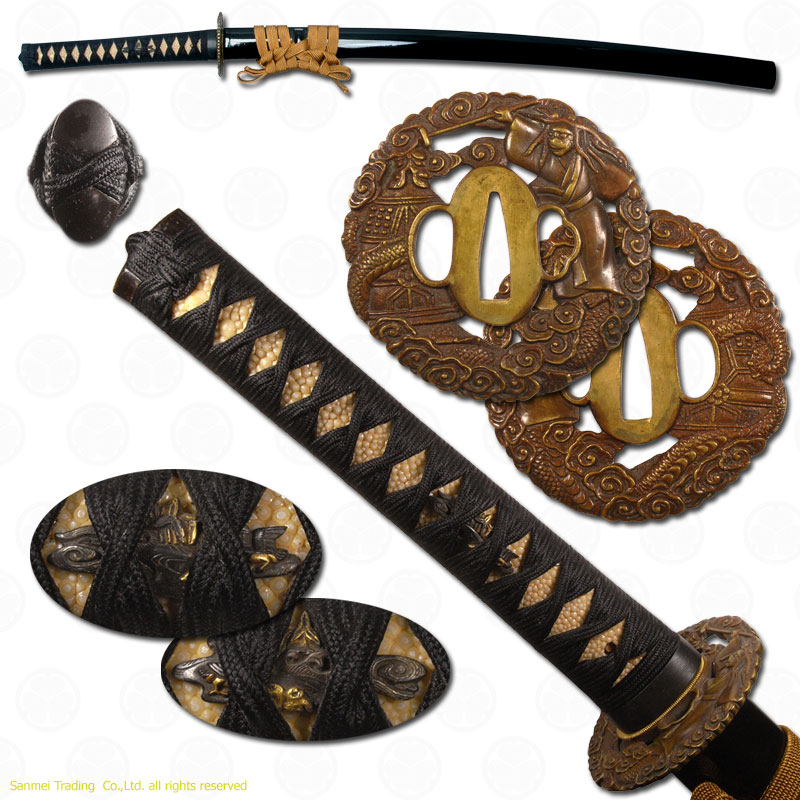
with)Black Ro-iro Japanese lacquered sheath Dojoji style Tuba Uchigatana Koshirae
Length of cutting edge63.3cm Curvature1.1cm Width of base30.2mm Thickness of base6.7mm
Kitae(forging pattern) : Kitae-hada is super fine ko-itame wooden grain mark precisely. There works with deep sparkling glitter so called Ji-nie activity throughout Hiraji-surface that generates delicate Chikei scene (frizzy bluish Nie hard metal lines).
Hamon(tempering pattern) : Hamon is deep Nie-based vividly, stars with gentle steep temper so called Osaka-style Yakidashi, and large-gunome, box-shape, that varies in height, generously active in shape. The thick Nie-feet growing to the interior of temper and works with Sunagashi nie lines. The entire temper is vivid and filled in throbbing energy that shows a typical Osaka Shinto style.
Boshi (tip): The temper of the tip is straight into medium circle.
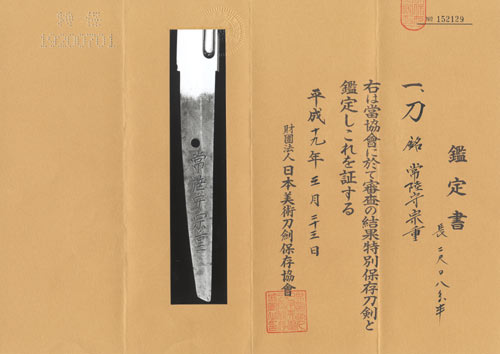
Nakago(tang) : UBU original, Slanted left (o-sujikai) and horizontal Kesho filemarks. V-shape (Iriyama) shape heel. The signature in hakiomote starts with the title [Hitachi-no-kami] and smith name [MUNESHIGE].
The subject katana MUNESHIGE, assumed an article made to order using a fine steel, gracefully tempered, well-balanced suitable configuration. The subject artisan Muneshige comes from Harima province, real name - Tada Ubei, had joined to Tsuda Sukehiro school in Settsu province to acquire the latest/highest skill from the top sword smith SUKEHIRO. The subject sword shows lively his Osaka-shinto-style technique and his characteristics are fully revealed in this sword.
The koshirae consists of black Ro-Iro lacquered sheath, Fuchi made of Shakudo Nick pattern/Kashira is made of horn, Menuki Shakudo ground, Yobori water plantain, an arrowhead and water bird. Tsuba Yamagane ground Nikubori/Openwork Doujouji Kabuki plays scene, and the hilt is white lay-skin, dark blue lozenge silk cord wrap. Chip off mark on base purposely remained to respect an original width and shape.
Silver foiled habaki collar, Shira-Saya plain wood mounting includes.